
Mason’s Patent Crowleytown Jar
Mason’s Patent NOV 30TH 1858
Crowleytown Mason Jar
John L. Mason, Crowleytown, New Jersey
Teal Green Quart
Provenance: Jerry McCann Collection
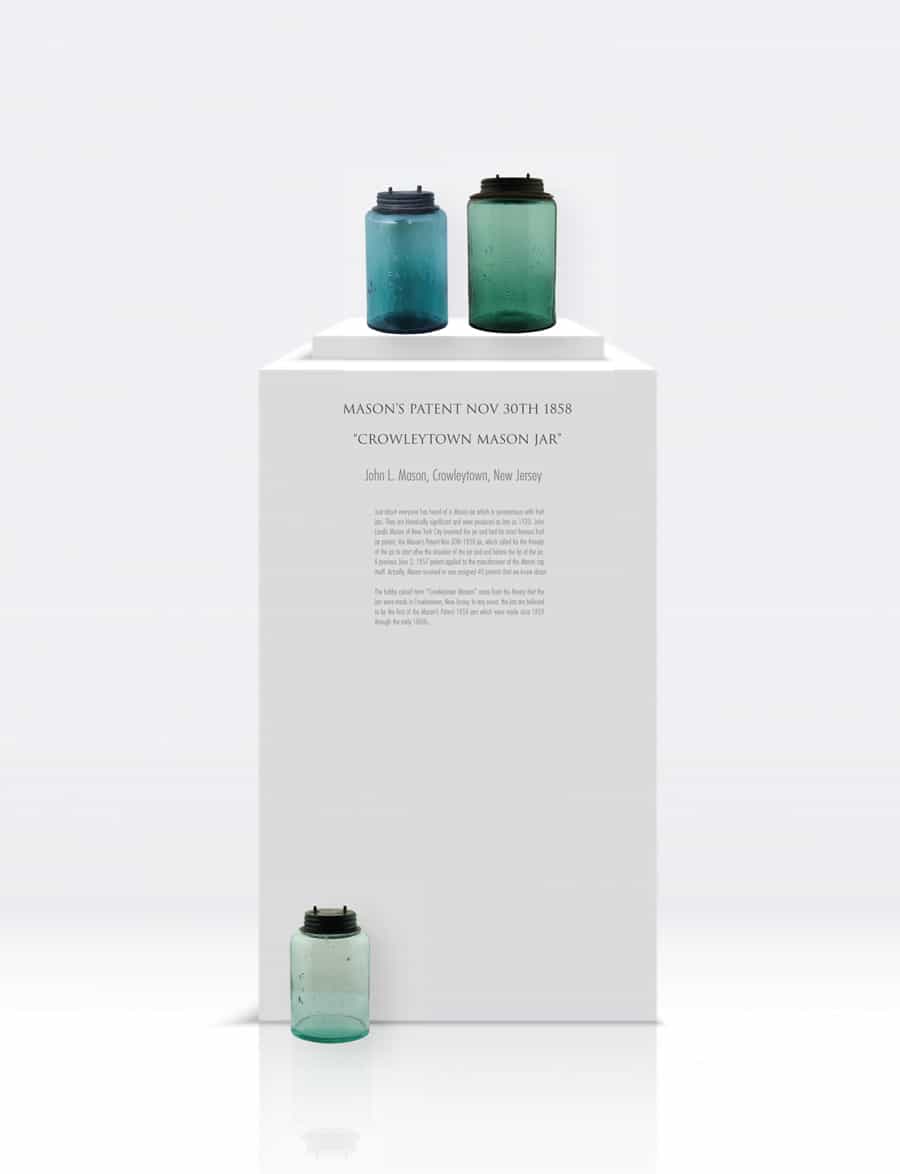
Just about everyone has heard of a Mason jar which is synonymous with fruit jars. They are historically significant and were produced as late as 1920. John Landis Mason of New York City invented the jar and had his most famous fruit jar patent, the Mason’s Patent Nov 30th 1858 jar, which called for the threads of the jar to start after the shoulder of the jar and end before the lip of the jar. A previous June 2, 1857 patent applied to the manufacturer of the Mason cap itself. Actually, Mason received or was assigned 40 patents that we know about.
The hobby coined term “Crowleytown Masons” came from the theory that the jars were made in Crowleytown, New Jersey. In any event, the jars are believed to be the first of the Mason’s Patent 1858 jars which were made circa 1859 through the early 1860s.
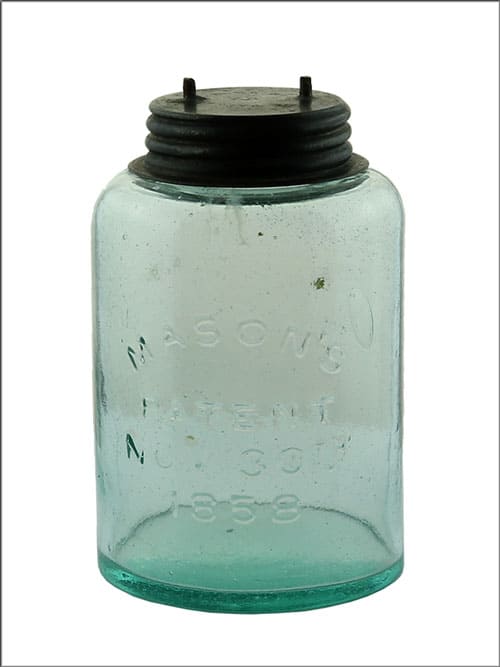
We have a second Crowleytown Mason in aqua in our museum with an original brass lid from the Darrell Plank collection.
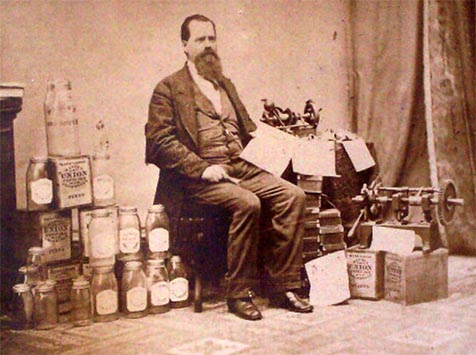
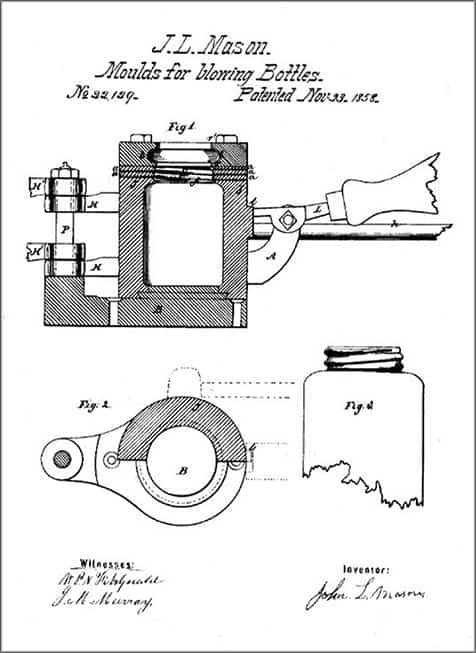
John Landis Mason was initially a tinsmith when he invented a method of mass-producing metal screw caps in New York City. In 1857, he patented the combination of a lathe and a metal chuck, which turned sheets of metal into threaded caps. While Mason produced some of these caps for use on hand-made tin cans, he soon turned to glass jars which would accommodate his patent for lids.
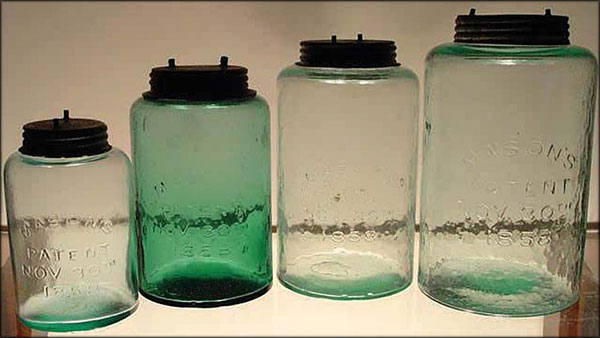
These early Mason Crowleytown containers looked like glass versions of tin cans because they have straight sides, flat bases (usually without mold seams across it), square corners at the heel, and a sharp rounded shoulder making a wide flat sealing surface just below the neck. This look is distinctively different than most Mason’s Patent 1858 jars.
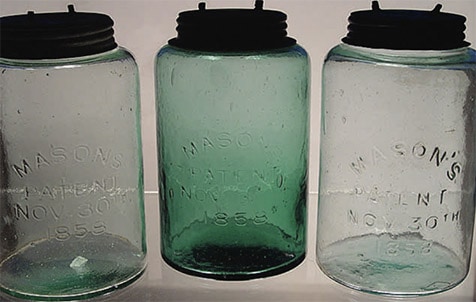
Initially, most collectors of Mason jars and related historians felt like these first Mason jars were made in Crowleytown, New Jersey. The strongest evidence associating Crowleytown with Mason is the existence of a chipped Mason jar that was dug at the Crowleytown factory site by J. E. Pfeiffer. Some early writers, including Van Rensselaer and Knittle, asserted that the first Mason jars were blown at Tansboro, New Jersey in an area where the 1869 business directories list John L. Mason among glass manufacturers. Most likely, the Crowleytown style jars were produced at several different sites.
Crowleytown jars were made in the following sizes: Smaller than a midget, midget pint, regular pint, 1 ½ pint, quart, and ½ gallon. Crowleytown style jars exist in several variations. This strongly suggests that the jars manufacture was over a period of time and that they were not blown at one particular glass house location.
More: See a Mason’s Patent 1857 jar in our museum with a sea of tiny bubbles.
Primary Images: Both Crowleytown Mason jars imaged on location by the FOHBC Virtual Museum midwest studio led by Alan DeMaison.
Support: Reference to Celebrating 150 Years of Mason Jars 1858-2008 by Jim Sears and Joseph Merke, Bottles and Extras, November – December 2008
Support: Reference to Red Book #11, the Collector’s Guide to Old Fruit Jars by Douglas M. Leybourne, Jr.
Support: Reference to Fruit Jar Annual 2020 – The Guide to Collecting Fruit Jars by Jerome J. McCann
Support Image: Aquamarine example from the Darrell Plank collection.
Support: Auction Lot 173: “Mason’s / Patent / Nov. 30th / 1858” Fruit Jar, probably Crowleytown Glass Works, Crowleytown New Jersey, 1851-1866. Cylindrical, aquamarine, ground mouth – smooth base, quart; (professionally cleaned, light exterior scratches to right of embossing, several shallow manufacturing flakes from gound mouth). L #1771 Retains unmarked zinc lid with vertical lug. Highly whittled exterior surface. Fine condition. – Norman C. Heckler & Company
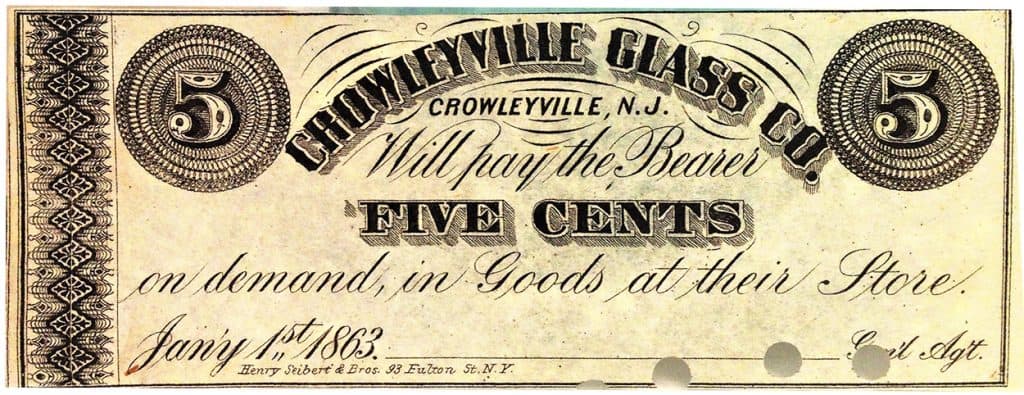
Support Image: Crowleyville Glass Co. facsimile currency – Vanaman collection
Join the FOHBC: The Virtual Museum is a project of the Federation of Historical Bottle Collectors (FOHBC). To become a member.