GI-113 • “Kossuth” And Bust – Tree Portrait Calabash Flask

GI – 113
“Kossuth” And Bust of Kossuth – Tree
Portrait Calabash Flask
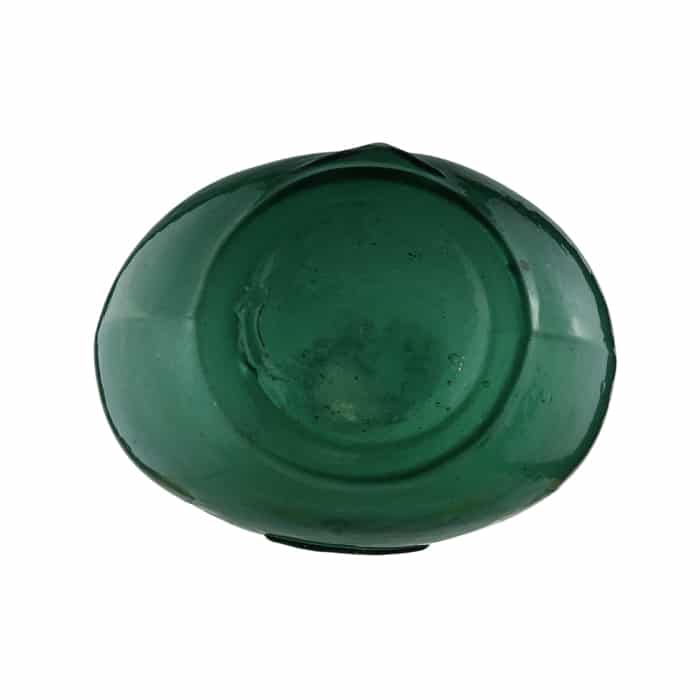
Teal Blue Green Quart Calabash Flask
Provenance: Alan DeMaison Collection
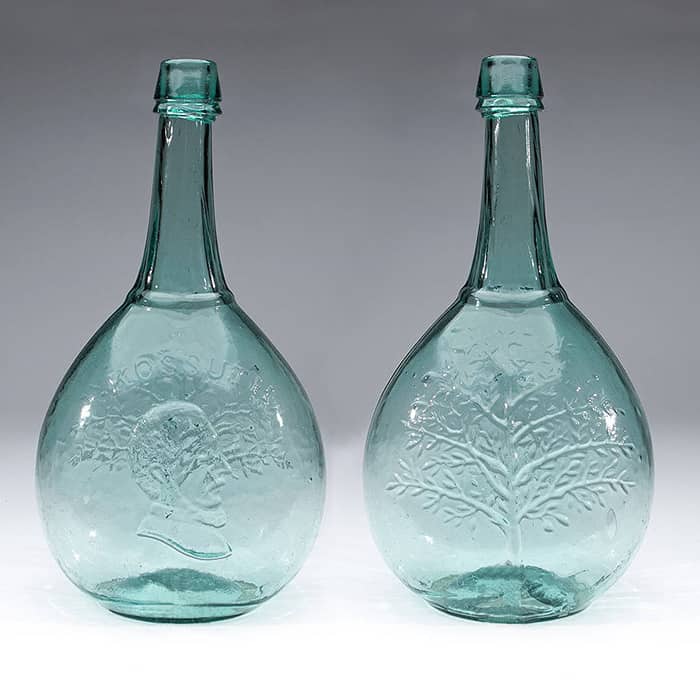
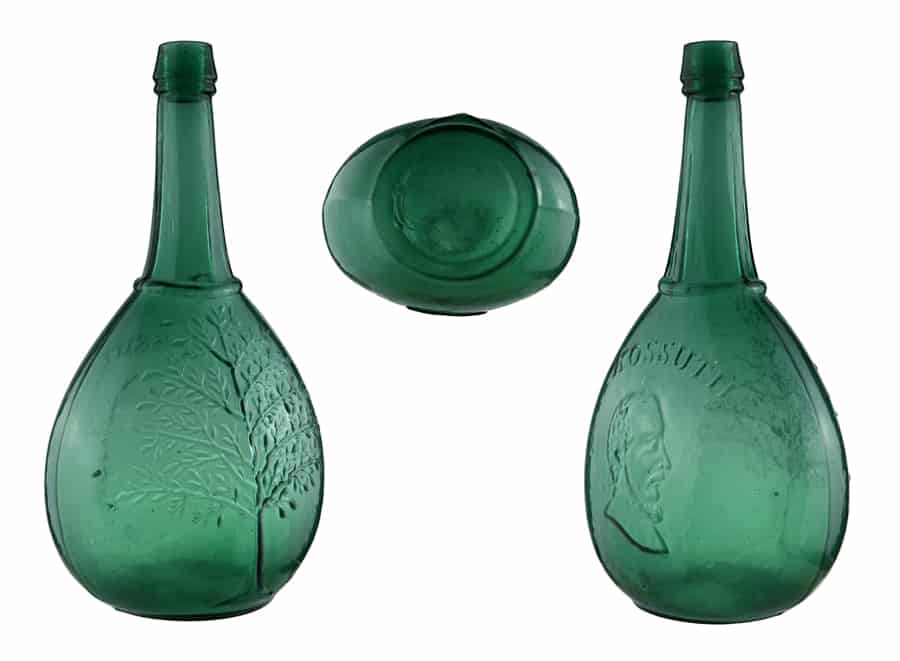
Our quart pictorial or figured calabash flask was made in an attractive teal blue-green glass and presents Louis Kossuth on one side and a tree on the other. A calabash is a large gourd or pear-shaped bottle or flask, popular during the mid-19th century from about 1850 to 1870. Period bottle makers sometimes called them “globe bottles.” The name presumably originates from the resemblance of these bottles to the hard-shelled, gourd-like fruits of the tropical American “calabash tree.”
See the museum example of a GI-105 “Jeny Lind” and Bust – Factory Calabash Flask
See the museum example of a GI-112 “Louis Kossuth” and Bust – “U.S. Steam Frigate Mississippi S. Huffsey” and Frigate Portrait Calabash Flask.
See the museum example of a Sheaf of Wheat – Star Pictorial Handled Calabash Flask
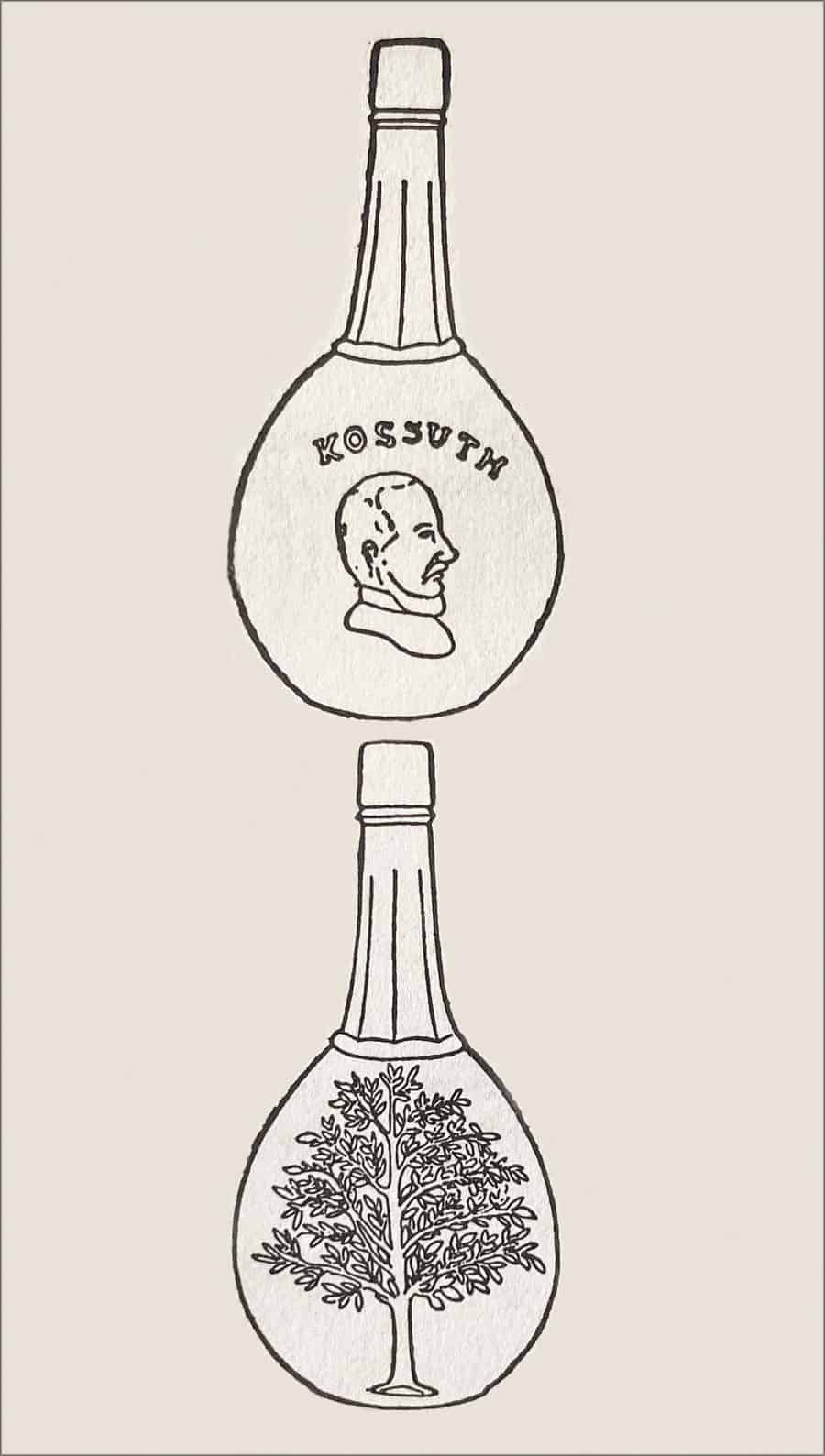
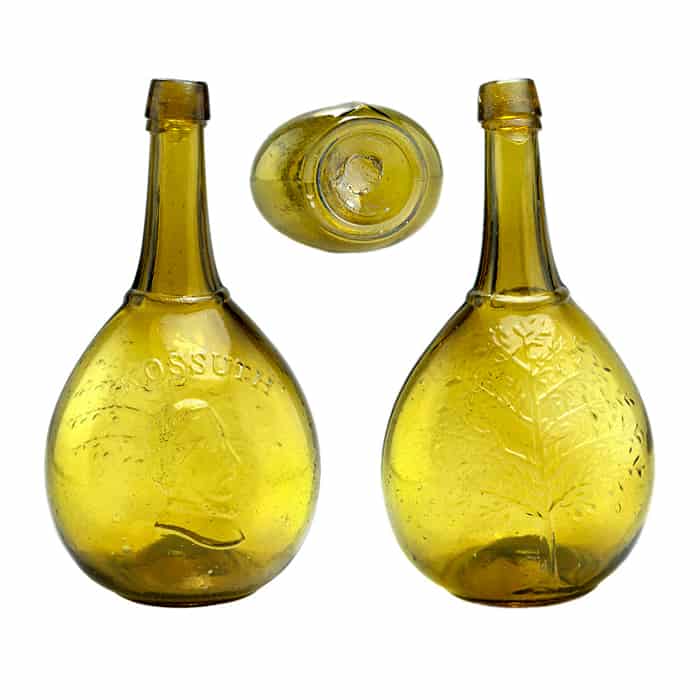
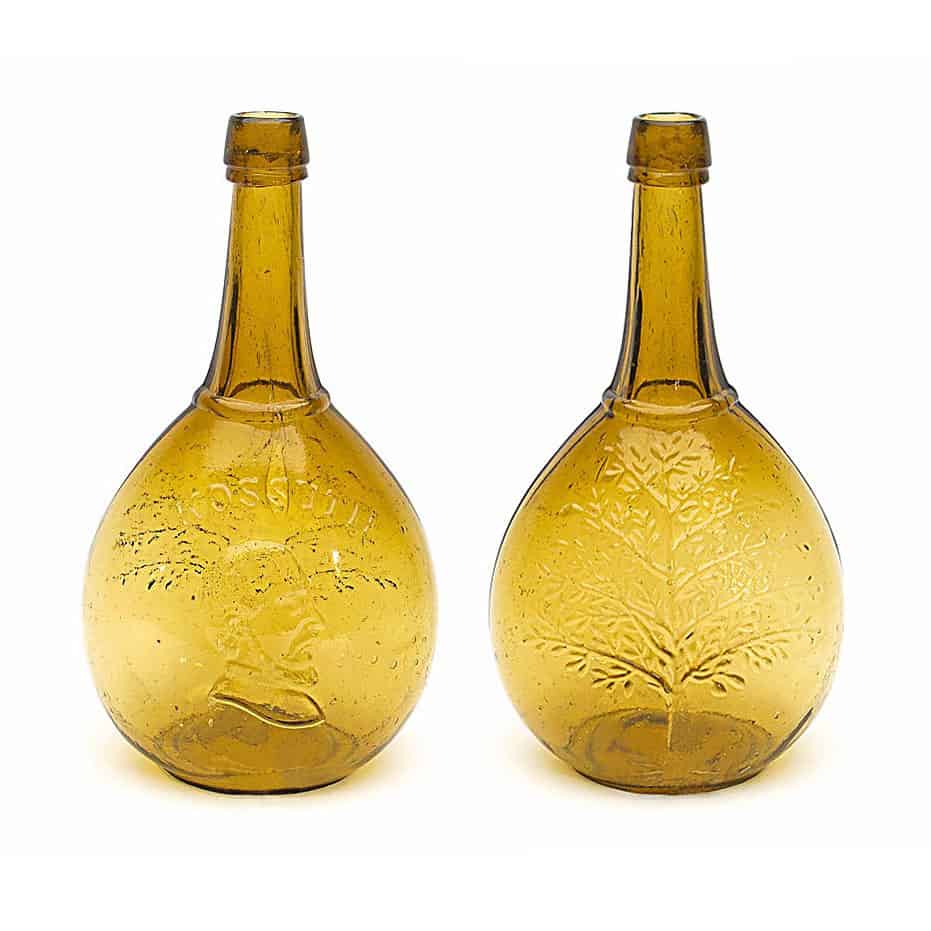
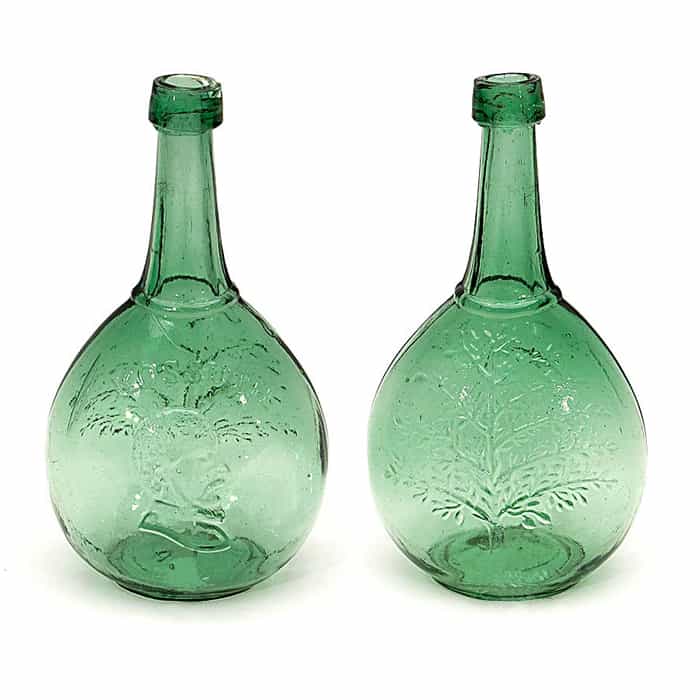
The obverse side of the calabash flask has a small profile bust of Louis Kossuth facing right with his military collar showing. Embossed serifed copy reading ‘KOSSUTH’ in a slight curve is above the bust. The reverse side of the flask depicts an embossed tree in foliage. The flask sides are smooth. The mouth is a sloping collar with a beveled ring. The base is blowpipe pontil scarred. Known colors are blue and green aquamarine, which is common. Golden yellow, straw yellow, olive-yellow, yellowish apple-green, yellow-green, light blue-green, medium green, grass green, medium topaz, and teal blue-green colors have been recorded with variations aplenty. The glasshouse is unknown, though it could have been made in Philadelphia or a south New Jersey glasshouse.
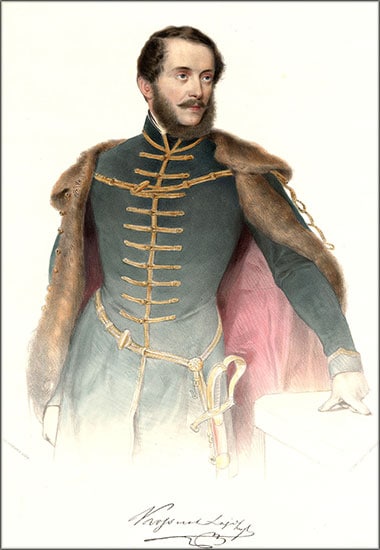
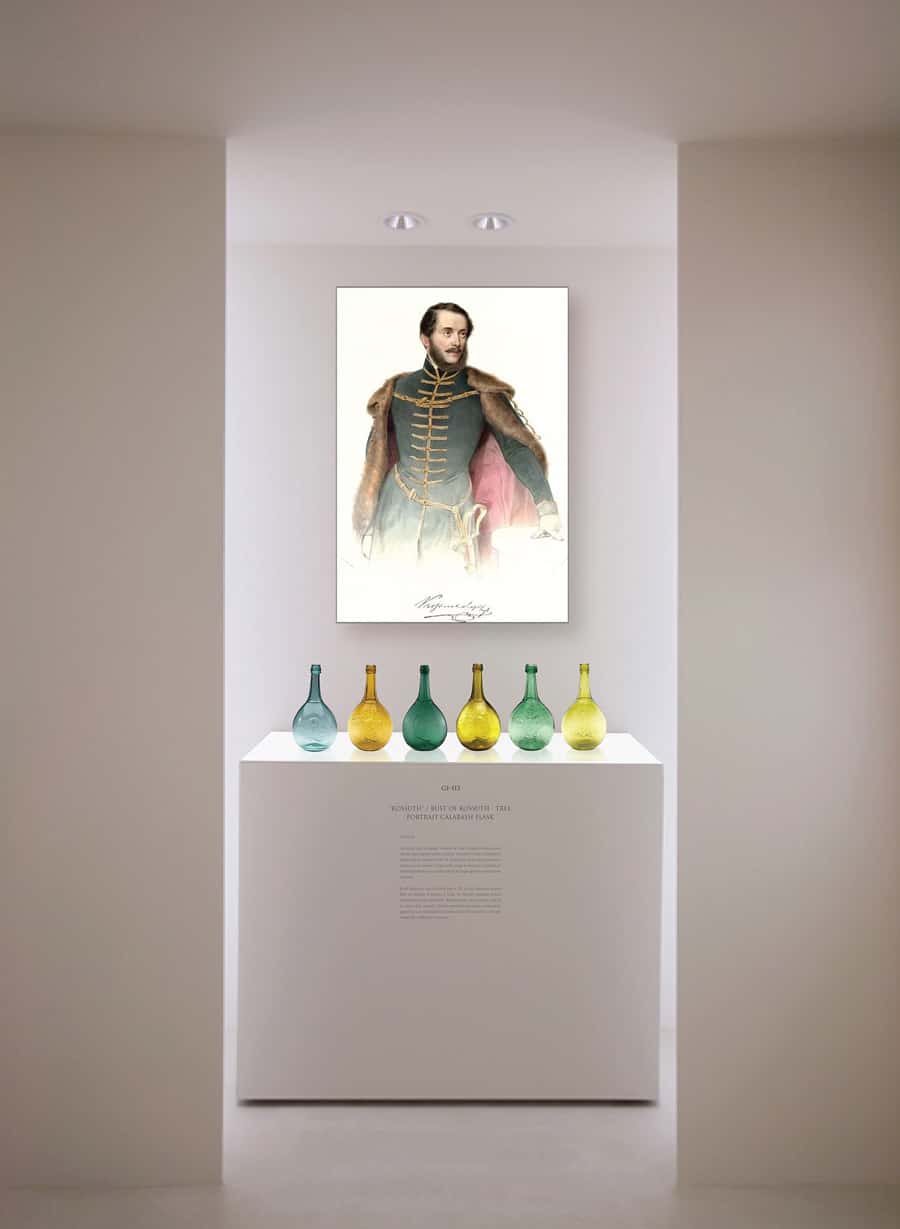
Louis Kossuth (Lajos in Hungarian) is considered the “Father of Hungarian Democracy.” He was a nobleman, lawyer, journalist, politician, statesman, and Governor-President of the Kingdom of Hungary during the revolution of 1848–49. He was famous for his oratory powers and for leading a successful revolution in Hungary in their struggle for independence from Austria. He saw both extraordinary success and abject failure in his struggle against the entrenched power of monarchs. Kossuth, fleeing arrest, came to the United States in 1851 to a hero’s welcome as a freedom fighter and bellwether of democracy in Europe. The influential contemporary American journalist Horace Greeley said of Kossuth, “Among the orators, patriots, statesmen, exiles, he has, living or dead, no superior.” Kossuth’s powerful American speeches so impressed the populace that he was immortalized and commemorated in many ways, such as on this glass calabash flask.
Trees represent life, wisdom, power and prosperity. They symbolize, inspire, and express our deepest feelings of love, gratitude, protection and happiness and represent our country’s life, vitality, strength and growth.
Primary Image: GI-113 “Kossuth” Bust of Kossuth – Tree Portrait Calabask Flask imaged on location by Alan DeMaison, FOHBC Virtual Museum Midwest Studio.
Primary Image Support: Auction Lot 17: “KOSSUTH” / BUST OF KOSSUTH – TREE Historical Calabash, America, 1852 – 1860. Teal blue with a slight greenish tone, applied sloping collar with bevel – blowpipe pontil scar, Qt; (some overall light interior cloudiness, and an in-manufacture pontil chip, otherwise excellent). GI-113. A most unusual and rare color for this mold. With just a light interior cleaning, it would likely present as virtually attic mint! – John Pastor, American Glass Gallery, Auction #20, May 2018
Support: Auction Lot 127: “KOSSUTH” / BUST OF KOSSUTH – TREE, (GI-113), American, ca. 1855 – 1865, olive-yellow calabash, open pontil, applied tapered collar mouth. Fine example in an unusual color for this mould that normally occurs in aqua. Probably blown at a Philadelphia or Southern New Jersey glass house. – Jim Hagenbuch, Glass Works Auctions, February 2020
Support: Auction Lot 48: “Kossuth” And Bust – Tree Portrait Calabash Flask, America, 1845-1860. Golden yellow with an olive tone, applied sloping collared mouth with ring – pontil scar, quart; (1/8 inch open bubble at shoulder of bust). GI-113 Beautiful and appealing color. Fine condition. – Norman Heckler Jr. & Sr., Norman C. Heckler & Company, Auction #33
Support: Auction Lot 91: “Kossuth” And Bust – Tree Portrait Calabash Flask, America, 1850-1875. Light greenish aquamarine, applied sloping collared mouth with ring – pontil scar, quart; (light scattered exterior wear marks). GI-113 A strong mold impression and subtle color. Fine condition. – Norman Heckler Jr. & Sr., Norman C. Heckler & Company, Auction #189
Support: Auction Lot 94: “Kossuth” And Bust – Tree Portrait Calabash Flask, America, 1840-1860. Medium yellowish green, applied sloping collared mouth – pontil scar, quart; (3/8 inch flake on mouth edge with associated 3/4 inch fissure). GI-113 Strong embossing. Pretty medium density color. – Norman Heckler Jr. & Sr., Norman C. Heckler & Company, Auction #122
Support: Auction Lot 49: “Kossuth” And Bust – Tree In Leaf Portrait Calabash Flask, America, 1845-1860. Brilliant yellow with a green tone, applied sloping collared mouth with ring – pontil scar, quart; (light exterior high point wear). GI-113. Pretty color, bold embossing and in fine condition. Timothy and Christine Hill collection. – Norman Heckler Jr. & Sr., Norman C. Heckler & Company, Auction #159
Support: Reference to American Bottles and Flasks and Their Ancestry by Helen McKearin and Kenneth M. Wilson, Crown Publishers Inc., New York, 1978.
Support Image: Prinzhofer, August, “Kossuth” (1849). Prints, Drawings, and Watercolors from the Anne S. K. Brown Military Collection. Brown Digital Repository. Brown University Library.
Join the FOHBC: The Virtual Museum is a project of the Federation of Historical Bottle Collectors (FOHBC). To become a member.