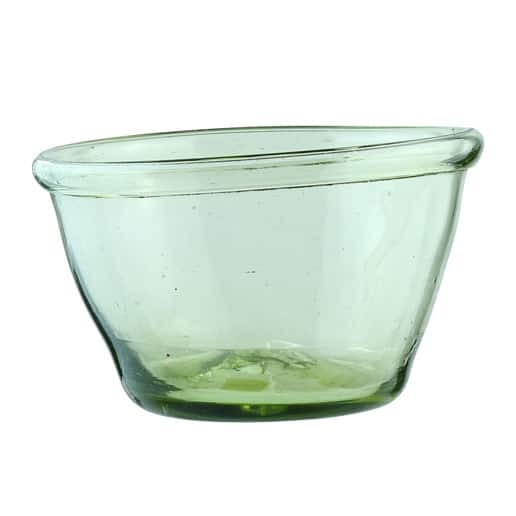
Mantua Bowl
Mantua Bowl
Early American Molded Glass
Attributed to Mantua Glass Company
Ravenna, Portage County, Ohio
Pale Yellow Bowl
Provenance: John Fifer Collection, ex Darl Fifer Collection
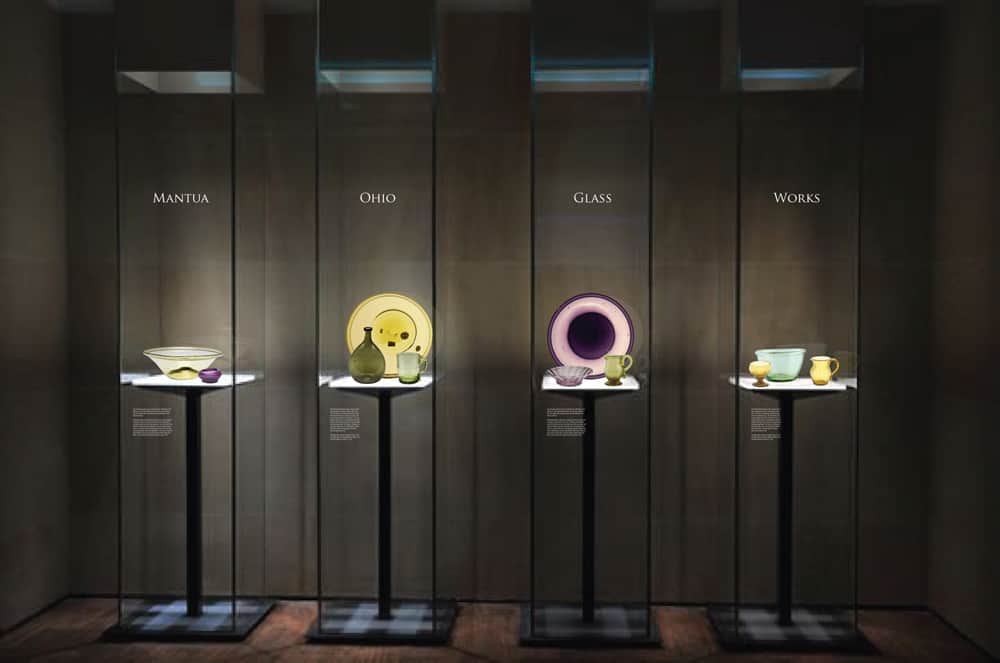
Mantua Glass Works located in Mantua, Ohio produced early American molded glass referring to functional and decorative objects, such as bottles, and dishware, in the 1820s. The objects were produced by blowing molten glass into a mold, thereby causing the glass to assume the shape and pattern design of the mold.
Common blown molded tableware items bearing designs include salt dishes, sugar bowls, creamers, celery stands, decanters, pans, and drinking glasses. We are pleased to have a nice Mantua Glass Works display in our Tableware Gallery that includes this exquisite pale yellow bowl.
This same pale-yellow Mantua bowl was prominently on display in the Pattern Molded Tableware category in the judged competition at the FOHBC 2018 Cleveland National Antique Bottle Convention. The Mantua creamer on the left actually won 1st place in the category while the bowl was runner up.
The pale yellow bowl is attributed to the Mantua Glass Company in Ravenna, Ohio circa 1821 to 1829. The upper diameter measurement is 5 ½ inches, the bottom diameter is 3 ½ inches and the height is 3 inches. The piece is from the Darl Fifer collection, ex Clark Garrett. The bottom of the Mantua bowl has a rough pontil scar and provenance stickers.
See the museum example of the Mantua Creamer.
Mantua Glass Company
Since the early nineteenth century, not long after the establishment of the territory as a State, glassmaking has been one of the major industries of Ohio. This tradition holds an important place in the development of the industry in America.
David Ladd founded the Mantua Glass Company, the first glass manufactory in Ravenna, Portage County, Ohio in 1821. At that time, the settlement consisted of scarcely more than a few log houses, a mill, and a tavern. Ladd moved to Portage County from Connecticut in 1816 and opened his glass factory in a converted tannery. He hired Jonathon Tinker from Vernon, New York as superintendent and primary glassblower for the business. Tinker was the son-in-law of Oliver Lewis, one of the founders of Mount Vernon Glass Works, and had worked in the family business before going to Ohio.
The Mantua Glass Company completed its plant in 1822. The Western Reserve Chronicle published in Warren, Ohio, printed the following on February 9, 1822.
We have lately received as a present from the proprietors of the glass works in Mantua, a very clear well-shaped decanter and elegant sweet-meat, as a specimen of their skill in the important manufacture in which they are engaged. Both of these articles are ample proof of the ability of the enterprising and meritorious owners of this establishment to serve the public in their line of business. We hope they will receive all the encouragement necessary for the support and prosperity of their highly useful undertaking.
Western Reserve Chronicle
Later both Ladd and Tinker built glasshouses on the Cuyahoga River, at Carthage and Franklin Mills, which were so close together that they were incorporated as the town of Kent. Both had brought with them from the East, the traditions of glassmaking – perhaps even some of the molds used there. At both Mantua and Kent, free-blown and pattern-molded glass was made, and three-mold blown as well. The three-mold patterns are combinations of diamond and ribs in various arrangements and are seen in decanters, pitchers, flips, and bowls which are represented above.
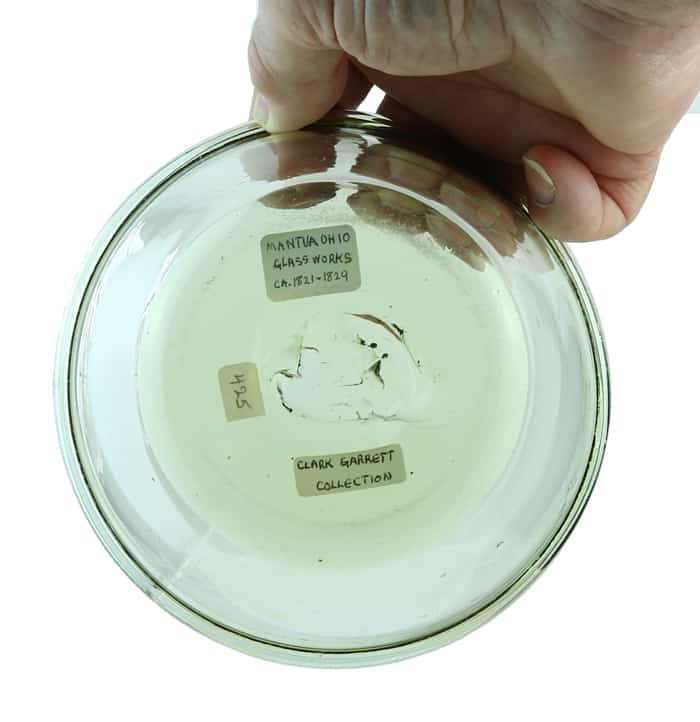
Primary Image: Pale yellow Mantua bowl imaged by the FOHBC Virtual Museum midwest studio by Alan DeMaison.
Support: Reference to Harry Hall White, Bottle Archaeologist and Researcher Extraordinaire by Bill Baab, FOHBC Bottles and Extras, September-October 2011
Support: Reference to Ohio Glass: 1815-1953, Toledo Museum of Art, 1953
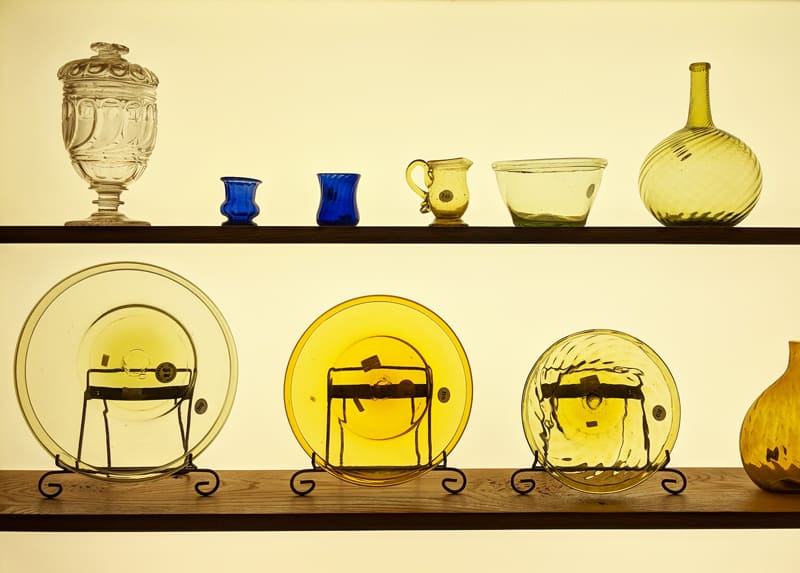
Support Image: Mantua Bowl: Probably Mantua Glass Works, 1821–1829 Mantua, Ohio. This bowl was formerly in the collection of Harry Hall White, who was a pioneering collector and scholar of early American glass. It exhibits some of the hallmarks of glass made in Mantua, Ohio, including a broken swirl pattern, 16 ribs, and a terminal ring. – Art Institute of Chicago, Emily Crane Chadbourne Decorative Arts Fund
Support Image: Mantua Pan, purple, Mantua Glass Works, 1821–1829 Mantua, Ohio, 5-3/8″ – Art Institute of Chicago, Emily Crane Chadbourne Decorative Arts Fund
Support Image: Mantua Pan, Yellow-amber, Mantua Glass Works, 1821–1829 Mantua, Ohio, 5″ – Art Institute of Chicago, Emily Crane Chadbourne Decorative Arts Fund
Support Image: Mantua Pan, Yellow-amber with bubbles, Mantua Glass Works, 1821–1829 Mantua, Ohio, 5-3/8″ – Art Institute of Chicago, Emily Crane Chadbourne Decorative Arts Fund
Support Image: Mantua Pan, pale green, Mantua Glass Works, 1821–1829 Mantua, Ohio, 6″ – Art Institute of Chicago, Emily Crane Chadbourne Decorative Arts Fund
Support Image: Mantua Pan, blue bowl, Mantua Glass Works, 1821–1829 Mantua, Ohio, 6-3/8″ – Art Institute of Chicago, Emily Crane Chadbourne Decorative Arts Fund
Support Image: Plate, Mantua Glass Works, Mantua, Ohio, 2 ½; Rim Diam: 15 ½; Base Diam: 7.¾ cm, about 1822-1829. Probably lead glass, bits of unfused “sand”, cloudy amethyst; free-blown; circular form, sides flaring from shallow circular base with rough pontil mark, to narrow outfolded rim. – Corning Museum of Glass
Support Images: 2018 FOHBC Cleveland National Antique Bottle Convention image archives.
Join the FOHBC: The Virtual Museum is a project of the Federation of Historical Bottle Collectors (FOHBC). To become a member.