Opermann Mustard Factory, N. W.
N. W. Opermann
Mustard Factory
Nicholas W. Opermann, Philadelphia, Pennslyvania
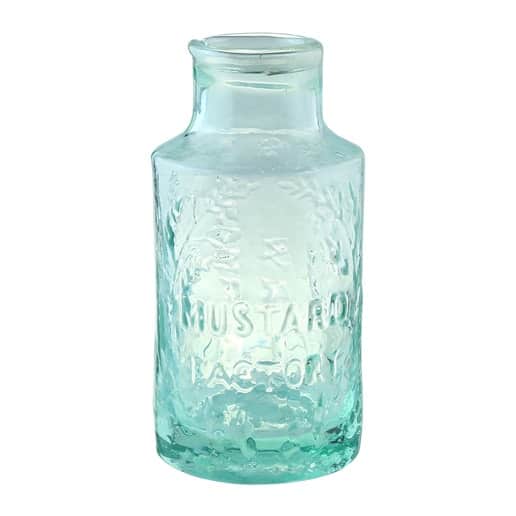
Aquamarine Mustard Jar
Provenance: Ron Hands Collection
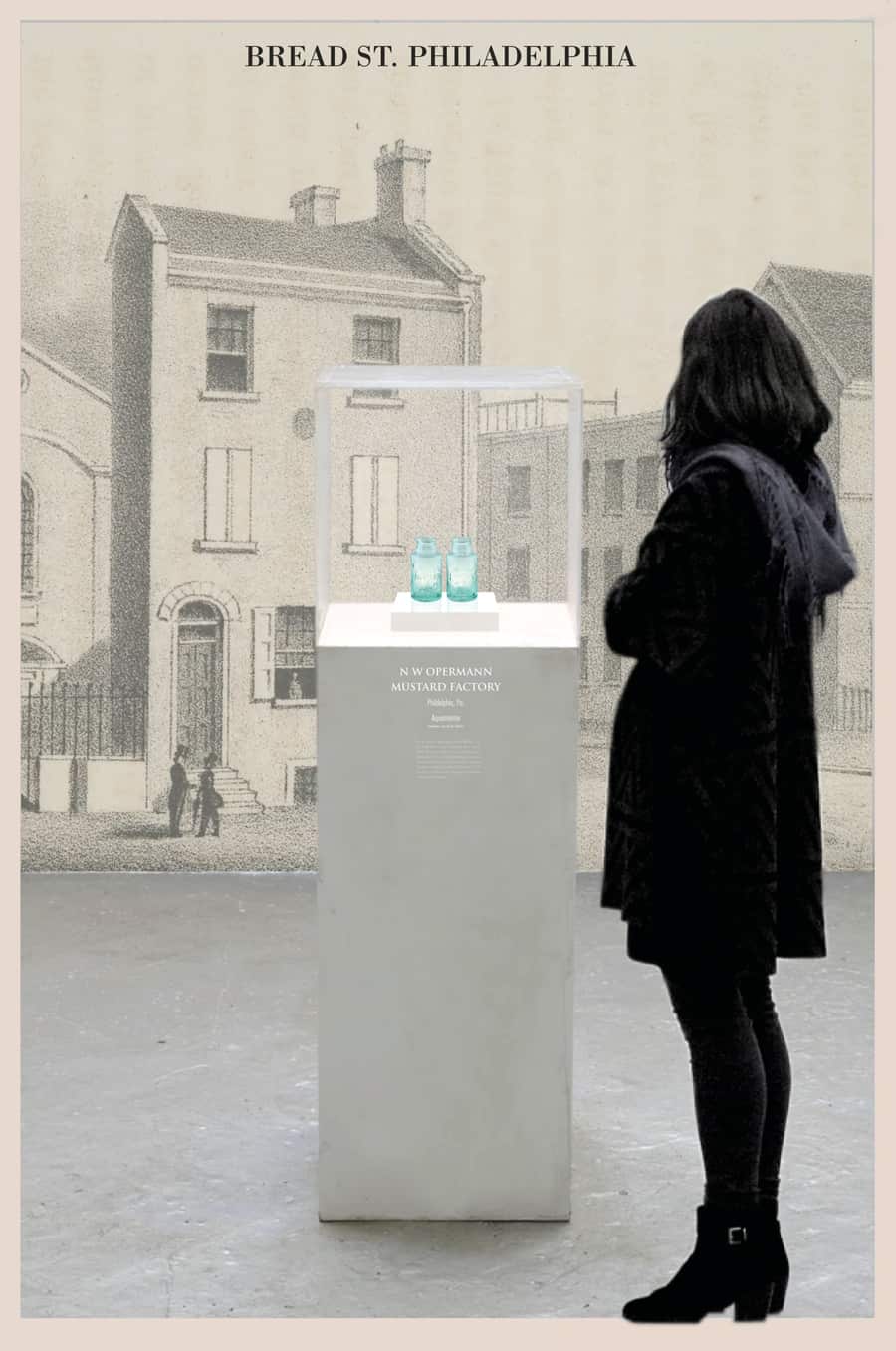
Our ornate round aqua mustard jar displays embossed copy reading ‘N. W. OPERMANN’ from base to shoulder on one face and ‘MUSTARD FACTORY’ in two horizontal lines on the other. Both sets of copy are surrounded by wreaths. The whittled jar measures 4-3/4″, has an open pontil, an inward rolled lip, and is considered very rare. The condition is excellent.
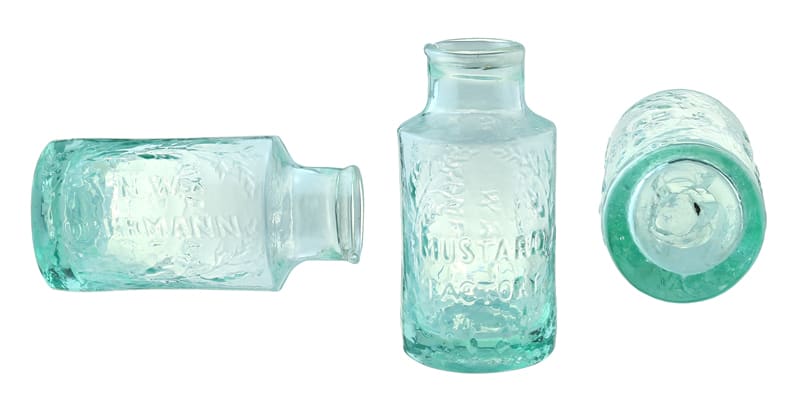
In the definitive book Ketchup Pickles Sauces – 19th Century Food in Glass by Betty Zumwalt in 1980, our subject bottle is represented on page 323 with a note saying “no information.” We can attribute this bottle to Nicholas Wilhelm Opermann who emigrated to America from Germany arriving in Philadelphia, Pennsylvania on September 25, 1847. He was listed as a mustard manufacturer on Bread Street as early as 1850. Opermann was born in Bietzen (ohne Geburten), Saarland, Deutschland and obtained his U.S. citizenship on September 5, 1866. His bottles were made between 1848 and 1858 based on listings in the 1850 U.S. Federal Census Report, tax records, immigration records, and Philadelphia Directory listings.
See the museum example of H. Baader Mustard Manufacturer, also from Philadelphia in the same time period.
Mustard has been one of the most widely grown and used spices in the world for many centuries. It was first used as a safe and effective remedy for just about any ailment imaginable before it was used as a seasoning and condiment.
In the 1755 Pennsylvania Journal (Philadelphia) there was a notice regarding the first attempt to manufacture flour of mustard commercially:
Whereas Benjamin Jackson, late of London, intended to carry on a mustard manufactory in this City but has been hitherto greatly disappointed he not being supplied with the proper quantity of mustard seed. This is therefore to acquaint those who have any of them, or are inclinable to raise any, that they may have Forty Schillings per bushel, or in proportion for a smaller quantity, (which is 15 pence per quart) – The best time to sow it is in the fall.
The first mustard bottles were vials imported from England and the term mustard bottle first started being used in colonial advertising around 1758. This replaced shipping mustard in casks which was more expensive and cumbersome. The first American bottles were probably manufactured by the Wistarburg Glass Works in the late 1770s in Salem County, New Jersey followed by Nicholson Glass Factory and Kensington Glass Works in Philadelphia and the New Jersey Glass Manufactory. Mustard consumption was growing and the need for bottles multiplied in cities and towns.
These early bottles were blown in natural aquamarine green glass and were similar to period snuff bottles, both using a powdered form. “London Mustard Squares” was advertised in New York City in 1808. These squares were followed by squares with chamfered corners and eventually round bottles such as our subject museum example. At some point, it was popular to use mustard barrel-form bottles.
See our museum example of an aqua G. K. Mustard barrel.
See our museum example of an aqua G. E. Mustard barrel.
See our museum example of a Wm. Schotten & Bro. St. Louis Mo. mustard barrel.
See our museum example of a Western Spice Mills Mustard.
Primary Image: The N. W. Opermann Mustard Factory jar imaged on location by Alan DeMaison, FOHBC Virtual Museum Midwest Studio
Support Image: The original Moravian church of 1820. S.E. corner of Moravian Alley (now Bread Street) & Race St., Lithograph by Herline & Hensel. Hayes & Zell, Publisher, 1857.
Support: Reference to Ketchup Pickles Sauces – 19th Century Food in Glass by Betty Zumwalt, 1980
Support: Reference to American Bottles and Flasks and Their Ancestry by Helen McKearin and Kenneth M. Wilson, Crown Publishers Inc., New York, 1978.
Join the FOHBC: The Virtual Museum is a project of the Federation of Historical Bottle Collectors (FOHBC). To become a member.